Baker Street bulky waste pickup -- Marylebone local guide
Posted on 27/04/2026
Baker Street bulky waste pickup: Marylebone local guide
If you live, work, or manage property near Baker Street, bulky waste has a way of becoming urgent at the worst possible moment. A sofa arrives on the pavement. A wardrobe has to go before a move. A landlord needs a flat cleared between tenancies. Suddenly, you need a clear, local plan for Baker Street bulky waste pickup that fits Marylebone's tighter streets, busy entrances, and residential expectations.
This guide explains how bulky item removal works in Marylebone, what to prepare, when it makes sense to book a professional collection, and how to avoid the common mistakes that slow everything down. You will also find practical comparisons, compliance notes, and a realistic step-by-step process you can actually use. If you want a broader view of local waste support, it can help to start with the area's services overview or the dedicated rubbish removal in Marylebone page for context.
Why Baker Street bulky waste pickup matters
Bulky waste is not just "more rubbish." It is the sort of waste that changes the logistics of a collection job. Think of broken wardrobes, mattresses, desks, dining tables, old appliances, shelving, and mixed household items that do not fit in a normal bin or a standard bag-and-bin collection. Near Baker Street, those items often need to be moved through shared entrances, narrow staircases, controlled access points, and areas with busy foot traffic. That makes planning as important as lifting.
Marylebone also has a mix of homes, short-let properties, offices, retail spaces, and managed buildings. Each one creates a slightly different bulky waste challenge. A single flat clearance may need quiet, careful removal. An office may need fast collection outside business hours. A period property may require extra protection for walls, lifts, and communal halls. In other words, the local setting matters.
There is also the practical side: bulky waste left too long can create safety issues, block access, attract complaints from neighbours, and complicate building management. If you are dealing with tenants, a sale, a refurbishment, or just a long-overdue clear-out, having a dependable collection option keeps the whole process moving. For readers handling more than one type of disposal need, the broader waste clearance in Marylebone service is often the most flexible starting point.
Expert summary: In Baker Street and wider Marylebone, bulky waste pickup works best when you plan for access first, item type second, and timing third. That order saves more headaches than people expect.
How Baker Street bulky waste pickup works
Most bulky waste collections follow a simple pattern: you identify what needs removing, confirm access, arrange a suitable time, and have the items taken away for sorting, reuse, recycling, or disposal. The details vary by provider, but the fundamentals stay the same.
For a local collection in Marylebone, the process usually starts with a description of the items. Good providers will ask about size, quantity, floor level, lift access, parking constraints, and whether any items are especially heavy or awkward. That is not bureaucracy for its own sake; it helps avoid delays and surprise charges.
From there, a quote is typically based on volume, labour, access, and any special handling needs. A small one-off pickup may be straightforward. A larger load, or one involving a flat with several flights of stairs, may need a more tailored estimate. If you are comparing options, the pricing and quotes page is a useful place to understand how a provider frames jobs and estimates.
On the day, the team will normally confirm the load, remove the items, and complete the collection without requiring you to drag everything to the kerb. That can be a major advantage in Baker Street, where pavement space and building access can be tight. Once collected, suitable items should be separated for recycling or reuse where possible, with the remainder handled in line with current waste practices.
If you have a mixed load, such as old furniture plus bagged junk or light renovation debris, it may be more efficient to combine it into a general rubbish removal Marylebone appointment rather than trying to split everything into separate jobs.
Key benefits and practical advantages
The real benefit of bulky waste pickup is not just removal. It is time, control, and reduced stress. That sounds obvious, but in practice the difference is noticeable.
- Less disruption: Items can be removed from inside the property rather than left outside for council schedules or neighbours to trip over.
- Better access management: A planned collection is easier to coordinate around lifts, concierge desks, loading bays, and parking rules.
- Faster turnaround: Handy when you are preparing a sale, end-of-tenancy handover, or refurbishment.
- Cleaner presentation: Especially important for landlords, agents, and businesses in Marylebone where first impressions matter.
- Flexible item types: Useful for mixed furniture, old appliances, and general household or office clutter.
- Potential recycling gains: Reputable providers will sort for reuse and recovery where possible rather than treating everything as landfill-bound waste.
There is also a quieter benefit: the job feels manageable again. Anyone who has looked at a hallway full of old furniture knows the moment when the property starts to feel smaller than it is. Once the waste is gone, the space changes immediately. That is especially true for compact Baker Street flats, where one bulky item can throw off the whole room.
For ongoing sustainability-minded readers, it is worth reviewing the local provider's approach to recycling and sustainability. A proper collection service should be able to explain what happens next in plain English.
Who this is for and when it makes sense
Bulky waste pickup is not only for people who are moving house. In Marylebone, it is useful for a wide range of situations:
- Homeowners replacing furniture or clearing out a spare room
- Tenants needing to leave a property clean and empty
- Landlords and agents handling an end-of-tenancy clearance
- Office managers removing desks, chairs, storage units, and dated equipment
- Builders and decorators with renovation waste mixed in with bulky items
- Local businesses refreshing interiors after a fit-out or rebrand
- Property sellers who want a cleaner viewing experience before listing
It often makes sense when the item is too awkward for a standard bin, too heavy for one person to carry safely, or too large to move discreetly without help. A tired sofa may be physically possible to get out by yourself, but that does not mean it is wise in a narrow staircase with a sharp corner and a wall to protect. Common sense wins here.
If your situation is more complex, such as a full flat clearance or a mix of furniture and general household items, you may get better value from a broader house clearance in Marylebone service rather than arranging several one-off pickups.
Step-by-step guidance
Here is a practical way to handle a bulky waste pickup near Baker Street without overthinking it.
- List every item clearly. Write down what is going, including approximate sizes and quantities. "Two wardrobes, one mattress, one broken desk" is better than "a lot of stuff."
- Check access. Note stairs, lifts, codes, concierge rules, parking limitations, and any time restrictions in the building.
- Separate special waste. Items like fridges, TVs, batteries, paints, and anything classed as hazardous should be flagged early.
- Choose the right service type. A single bulky item, a mixed load, or a full clearance each points to a different approach.
- Request a clear quote. Ask what is included: labour, loading, disposal, and whether there are extra fees for access or heavy lifting.
- Prepare the route. Move smaller objects out of the way, protect hallways if needed, and make sure entry points are accessible.
- Confirm timing. In Marylebone, the best slot is often the one that creates the least friction for neighbours, residents, or clients.
- Review what was removed. After collection, check that nothing was left behind and that the space is ready for the next step.
A small tip that saves time: photograph the items before booking. It helps if you need to compare quotes, and it gives everyone a shared reference point. No drama, no guessing.
Expert tips for better results
There are a few habits that make bulky waste collection smoother in Baker Street and throughout Marylebone.
- Measure doorways and stair turns before collection day if the item is especially large.
- Group similar items together so the team can load efficiently.
- Use a realistic time window if the building has restricted access or concierge control.
- Ask about reuse routes if some furniture is still in decent condition.
- Keep fragile surfaces protected in communal hallways and lifts.
- Flag urgent items early if you are working to a move-out or handover deadline.
If you are dealing with a job that also includes construction leftovers, combine it with a more specific service such as builders waste disposal in Marylebone. That is usually cleaner than trying to treat everything as one generic load.
Another useful move is to choose the right provider based on process, not just price. A cheap quote is not a bargain if it ignores access, arrives unprepared, or leaves you managing the mess afterwards.
Common mistakes to avoid
Bulky waste jobs go wrong for predictable reasons. Most are easy to avoid once you know what to watch for.
- Under-describing the load: If the provider expects one sofa and finds an entire room of furniture, the schedule and quote can be affected.
- Ignoring access constraints: Baker Street buildings often have lifts, codes, or parking limits that need advance planning.
- Leaving special items unmentioned: Fridges, electronics, and potentially hazardous materials need separate handling.
- Assuming "curbside" means "easy": Moving items to the street yourself may create safety or building-management issues.
- Not checking service scope: Some services cover loading; others expect you to do more of the prep work.
- Booking too late: If you are moving out or handing over keys, time pressure quickly makes everything harder.
One surprisingly common problem is forgetting about internal access until the day of the job. A wardrobe may technically fit through the front door, but if the route involves a tight turn at the top of the stairs, that detail matters. That is the kind of thing an experienced local collection team will usually ask about upfront.
Tools, resources and recommendations
You do not need much equipment to prepare for bulky waste pickup, but a few basic tools make the process cleaner and safer.
- Tape measure: Helpful for checking furniture dimensions against doorways, lifts, and stair turns.
- Phone camera: Useful for photos when requesting a quote or confirming the load.
- Gloves: A sensible precaution if you are sorting items before pickup.
- Labels or notes: Handy if some items are staying and some are going.
- Building contact details: Concierge, porter, or managing agent information can prevent delays on the day.
For readers who want a better sense of how a full-service provider operates locally, the site's about us page is a good place to understand the service approach and working style. If you want reassurance around handling standards and property protection, the insurance and safety information is worth a quick look too.
And if you are just exploring what is available in the area, the broader Marylebone services page helps connect bulky item removal to the wider range of local clearance options.
Law, compliance, standards, and best practice
Bulky waste collection in the UK sits within general waste-handling expectations, and responsible providers should follow the usual standards for safe transport, proper disposal, and sensible sorting. You do not need to be an expert in waste regulations to book a service, but you should expect a provider to act carefully and lawfully.
Best practice usually includes:
- Taking waste to appropriate facilities or transfer routes
- Handling potentially reusable items separately where practical
- Avoiding unsafe lifting or blockages in communal areas
- Providing clear paperwork or booking records where appropriate
- Respecting building rules, neighbours, and access restrictions
If a load includes items that may be regulated or difficult to classify, such as electrical appliances or materials that could be hazardous, it is wise to raise that early rather than trying to simplify it. A good provider should explain what can be taken, what needs separate handling, and what should not be mixed into a general load.
For customers who care about responsible disposal, a clear sustainability policy is a good sign. It shows the provider is thinking beyond "collect and dump," which is reassuring in a dense residential area like Marylebone.
Options, methods, and comparison table
Not every bulky waste job needs the same solution. In Baker Street, the right method depends on quantity, urgency, access, and how much of the work you want handled for you.
| Method | Best for | Strengths | Trade-offs |
|---|---|---|---|
| Council-style collection | Simple, low-volume bulky items | May suit routine disposal needs | Less flexible timing and handling |
| Private bulky waste pickup | Fast removal, difficult access, mixed items | More convenient and adaptable | Cost depends on load and access |
| Full house clearance | Moves, probate, vacant flats, large declutters | Most efficient for bigger jobs | May be more than you need for a small load |
| Office clearance | Desks, chairs, filing, workspace refresh | Good for business timing and scale | Needs careful planning in occupied buildings |
| Builders waste removal | Refurbishment debris and mixed renovation waste | Better fit for site clean-up | Not ideal for purely household bulky items |
For many Baker Street residents, a private pickup is the most practical middle ground: it is more flexible than waiting for a fixed collection and less disruptive than organising a larger clearance when you only need a few items removed.
Case study or real-world example
Consider a typical Marylebone scenario: a one-bedroom flat near Baker Street needs to be cleared before a new tenant moves in. The outgoing resident leaves behind a mattress, a chest of drawers, two chairs, and a dismantled shelving unit. The building has a narrow entrance, a shared hallway, and a lift that must be booked in advance.
The most efficient approach is not to pile everything outside and hope for the best. Instead, the items are photographed, access details are confirmed, and collection is arranged for a time that works with the building's restrictions. The team removes the bulky pieces from inside the flat, protects the route through the property, and takes the load away in one visit.
What made the job work well?
- The load was described accurately
- The access route was checked beforehand
- The building constraints were shared early
- The service matched the actual need, rather than a generic "rubbish" label
That is the real lesson: the smoother the handover, the quicker the job disappears from your to-do list. And honestly, that is the point.
Practical checklist
Use this checklist before your collection day.
- Item list ready: I know exactly what is being removed.
- Photos taken: I have clear images for quoting or reference.
- Access checked: I have confirmed stairs, lifts, parking, and entry rules.
- Special items flagged: Any electrical, heavy, or unusual items have been identified.
- Building contact informed: Concierge, landlord, or managing agent knows the plan if needed.
- Route cleared: Hallways and doorways are ready for safe movement.
- Timing confirmed: The collection slot suits the property and neighbours.
- Quote understood: I know what is included before agreeing to the job.
- Next step planned: The space will be ready for cleaning, viewing, or refurbishment afterwards.
If you can tick most of those off, you are already ahead of the average last-minute booking. That is usually enough to make the whole process feel much lighter.
Conclusion
Baker Street bulky waste pickup is straightforward when you treat it as a planning job, not just a lifting job. In Marylebone, access, timing, building rules, and item type all influence how smoothly the collection goes. Once you account for those details, bulky waste removal becomes a practical, low-friction part of moving, clearing, or improving a property.
The best results come from clear descriptions, realistic access planning, and choosing a service that understands local conditions rather than offering a one-size-fits-all answer. Whether you are clearing a single sofa or arranging a more involved property emptying, the right setup saves time and avoids unnecessary stress.
Get a free quote today and see how much you can save.
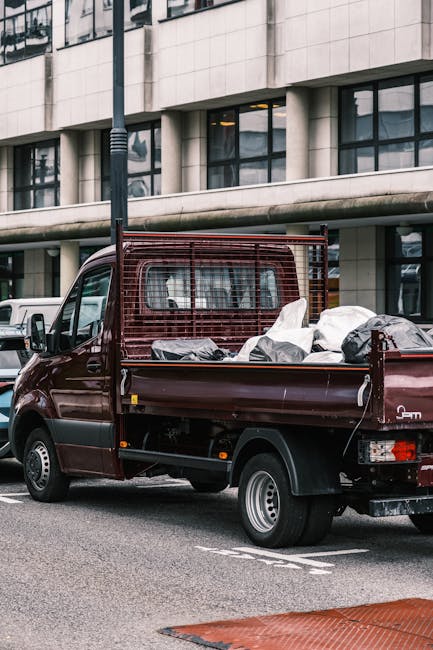
 Tipper Van - Domestic Waste Removal and Rubbish Removal Prices in Marylebone, W1
 Luton Van - Domestic Waste Removal and Rubbish Removal Prices in Marylebone, W1